
2011 Stanley Cup Final
Bruins defeat Canucks in seven games for first Cup since 1972.
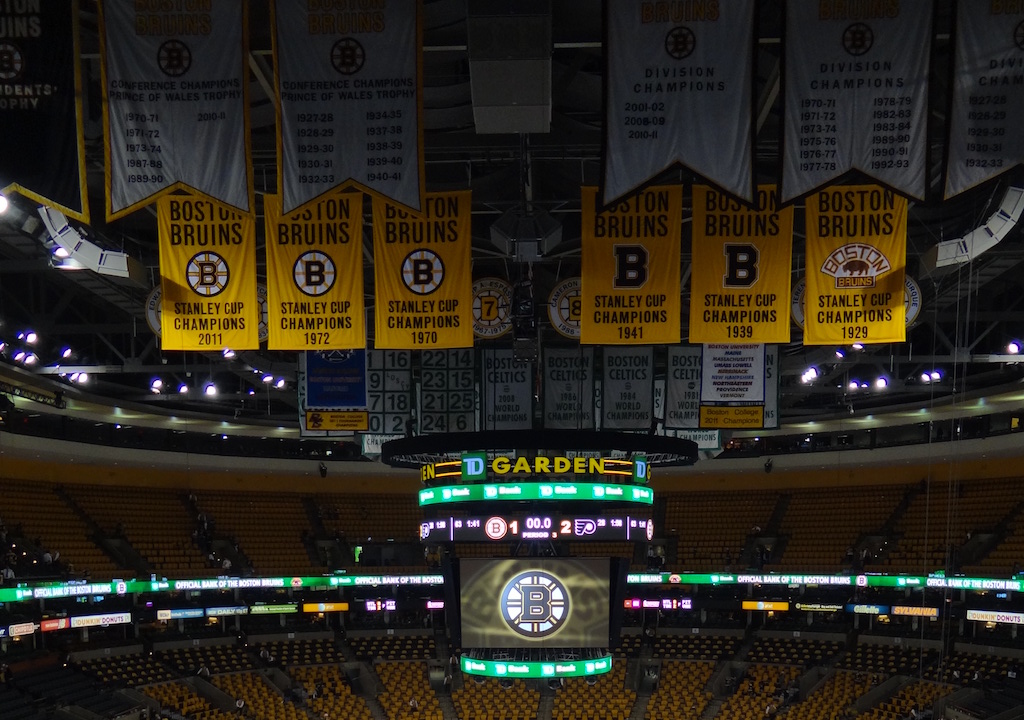
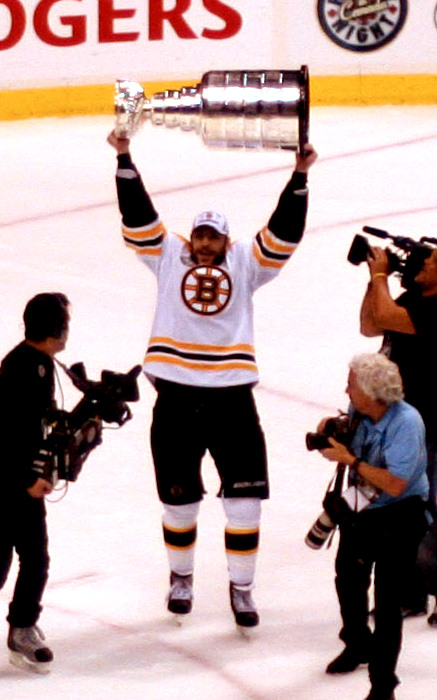
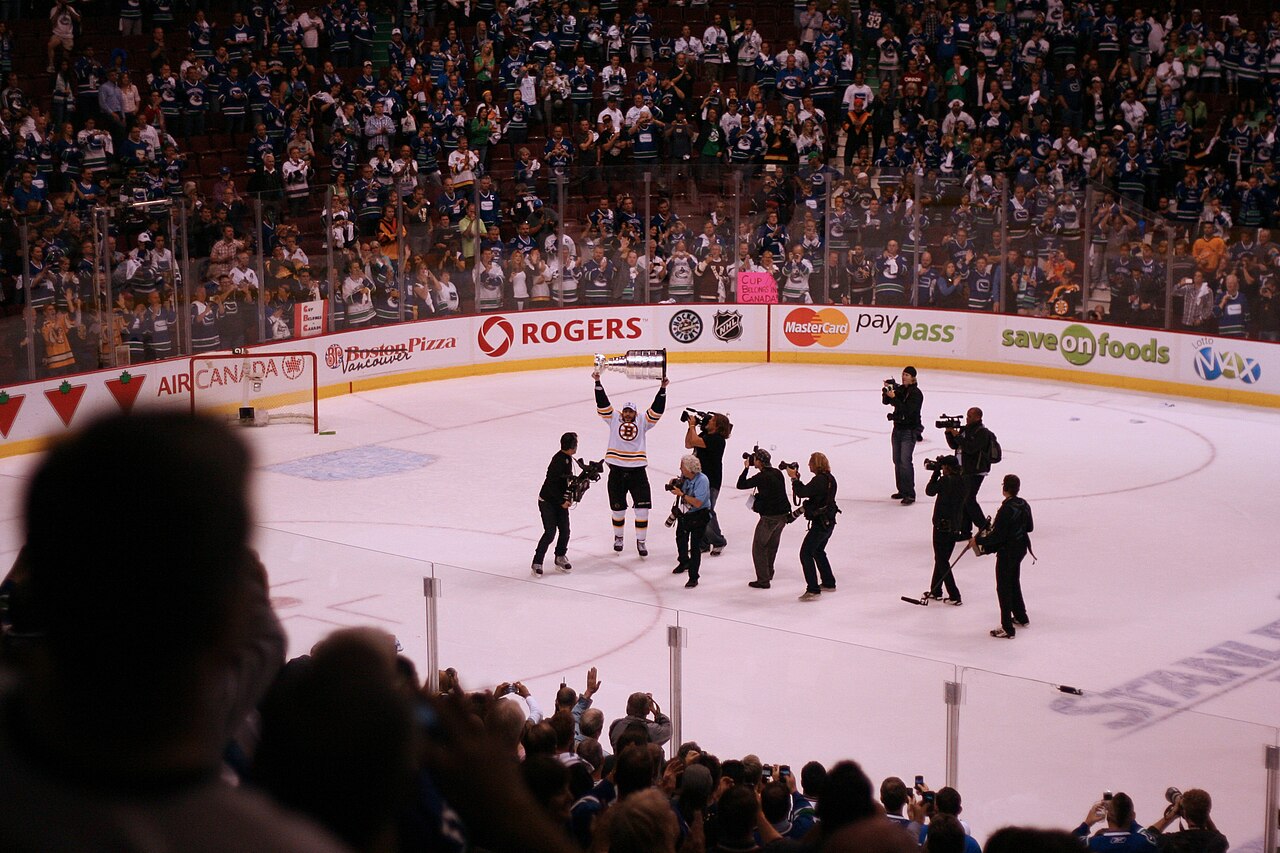
The 2011 Stanley Cup Final decided the NHL champion for the 2010–11 season, wrapping up the playoffs. The Boston Bruins, champions of the Eastern Conference, beat the Vancouver Canucks, champions of the Western Conference, in seven games. It was Boston’s first Stanley Cup win since 1972. Bruins goalie Tim Thomas won the Conn Smythe Trophy as the playoffs’ most valuable player.
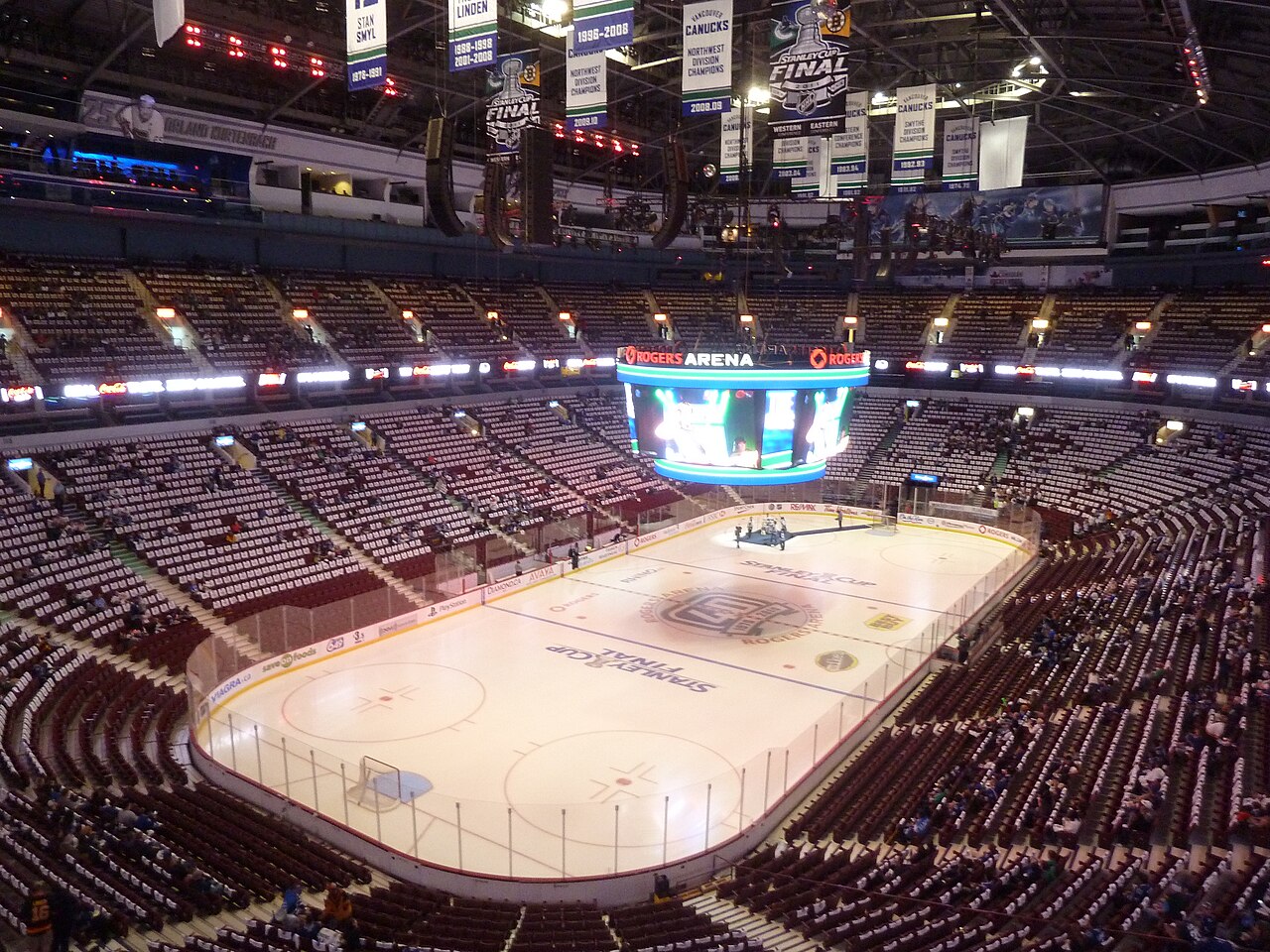
Vancouver had home-ice advantage throughout the Final after winning the Presidents’ Trophy for the best regular-season record, with 117 points. The Canucks were the first Canadian team to hold home-ice advantage in the Final since the Montreal Canadiens in 1993, and they were the last Canadian team to reach the Finals until 2021. The distance between Boston and Vancouver—4,023 kilometres (2,500 miles)—was the farthest between two Final cities in NHL history until the 2024 and 2025 matchups between the Florida Panthers and Edmonton Oilers.
The series ran from June 1 to June 15. Scoring was wildly different depending on the arena. In the three games played in Vancouver (games one, two, and five), Boston managed only two goals total. In the three games in Boston (games three, four, and six), they scored 17. Meanwhile, Canucks goalie Roberto Luongo posted two 1–0 shutouts in Vancouver (games one and five), but in Boston he was pulled for backup Cory Schneider twice (games four and six). Overall, the Bruins outscored the Canucks 23–8, matching Vancouver’s entire series output in a single game (game three). Despite that, the Canucks still won three games (one, two, and five). Vancouver’s eight goals are the fewest ever scored by a team in a full seven-game Final series. This was the fourth straight Final where the road team won the deciding game.
On June 1, NHL commissioner Gary Bettman announced that Colin Campbell would step down as the league’s head disciplinarian, replaced by former player Brendan Shanahan. Campbell kept his role as director of hockey operations. Mike Murphy, the NHL vice-president of hockey operations, handled disciplinary matters for the Finals. Concerns had been raised about Campbell’s impartiality because his son, Gregory, played for the Bruins.
The Final featured two francophone Canadian head coaches for the first time: Claude Julien of Boston and Alain Vigneault of Vancouver. Both had similar backgrounds. They grew up near Ottawa, played together for the Salt L
- Series winner
- Boston Bruins
- Series loser
- Vancouver Canucks
- Games played
- 7
- Conn Smythe Trophy winner
- Tim Thomas (Boston Bruins)
- Total goals scored by Bruins
- 23
- Total goals scored by Canucks
- 8
- Home ice advantage
- Vancouver Canucks (Presidents' Trophy winners)
Lore & Background
The Canucks had home ice advantage in the Final by winning the Presidents' Trophy as the team that finished with the best regular season record (117 points). They were also the first Canadian team to have home ice advantage in the Final since the Montreal Canadiens had it in 1993. The Canucks were also the last Canadian team to reach the Finals until 2021. It was the furthest distance between two cities in NHL history for the Finals, at 4,023 kilometres (2,500 miles), until 2024 and 2025 as both were between the Florida Panthers and Edmonton Oilers.
The series began on June 1 and ended on June 15. The games varied widely between those played in Vancouver and those in Boston. Prior to game seven, the Bruins scored two goals in three games played in Vancouver (games one, two, and five), against 17 scored in three games at Boston (games three, four, and six). On the other hand, while he posted two 1–0 shutouts in Vancouver (games one and five), Canucks goaltender Roberto Luongo was replaced with the backup Cory Schneider twice in three games (games four and six) in Boston. The Bruins scored almost three times the number of total goals as the Canucks, (23–8 in the series), and scored as many goals in a single game (game three) as the Canucks did during the entire series, but the Canucks still won three games (games one, two, and five, respectively). The eight goals scored by Vancouver is the lowest number of goals scored by any team in a full seven-game series in NHL history. It was the fourth consecutive Stanley Cup Final in which the road team won the Stanley Cup.
The Final marked the first time that two francophone Canadian head coaches, Claude Julien of Boston and Alain Vigneault of Vancouver had coached the opposing finalists. Both coaches also had nearly identical backgrounds. Both had grown up near Ottawa, both had played together with the Salt Lake Golden Eagles, both had coached the Hull Olympiques and Montreal Canadiens and both had won Coach of the Year honours. The two were friends, but that changed for the Final. According to Julien, "To be able to get through all that and meet in the final is great. But right now, that's where it ends."
Reader's Guide
The 2011 Stanley Cup Final is significant for several reasons. It ended a 39-year championship drought for the Boston Bruins, who had not won the Cup since 1972. The series also marked the last time a Canadian team reached the Finals until 2021, and the Canucks became the third team to lose the Final after winning the Presidents' Trophy, following the Bruins in 1990 and the Detroit Red Wings in 1995. The series featured extreme home-ice disparity: the Bruins scored only two goals in three games in Vancouver but 17 in three games in Boston. Vancouver's eight total goals remain the fewest ever by a team in a full seven-game series. The Final also saw the transition of NHL discipline leadership, with Colin Campbell stepping down as head disciplinarian and Brendan Shanahan replacing him, amid concerns about Campbell's impartiality because his son Gregory played for the Bruins. Additionally, Patrice Bergeron entered the Triple Gold Club by winning the Stanley Cup, having previously won Olympic gold and World Championship gold. The series was the fourth consecutive Stanley Cup Final in which the road team won the deciding game.
Did You Know?
- The eight goals scored by Vancouver is the lowest number of goals scored by any team in a full seven-game series in NHL history.
- It was the fourth consecutive Stanley Cup Final in which the road team won the Stanley Cup.
- Center Patrice Bergeron became the twenty-fifth player to enter the Triple Gold Club as a result of the Bruins winning the series.
- The series was the furthest distance between two cities in NHL history for the Finals, at 4,023 kilometres (2,500 miles), until 2024 and 2025.
The Rematch Without a Legend
The 1990 Stanley Cup Final carried the weight of a recent memory. Just two years earlier, the Edmonton Oilers and Boston Bruins had met in the 1988 championship, and the rematch in 1990 arrived with one massive difference: Wayne Gretzky was no longer in Edmonton. The franchise had traded their superstar to the Los Angeles Kings during the 1988 off-season, and this series would become the only Oilers title won after his departure. Edmonton still delivered, dispatching Boston in five games to claim their fifth Cup in a seven-year span. The broader context was equally remarkable. This contest marked the eighth straight Stanley Cup Final featuring an Alberta-based team and the ninth involving any Western Canadian franchise. Across those nine appearances, the Oilers accounted for six, the Calgary Flames for two, and the Vancouver Canucks for one. For Boston, the loss would prove devastating in the long run, as the Bruins would not return to the championship round until 2011, ending a 39-year drought.
A Series of Contrasts
Despite ultimately falling short, the Bruins controlled much of the early action. In the opener, Boston generated more scoring chances, and in Game 2 they held a commanding 15-4 shot advantage at one point before Edmonton mounted a comeback. Yet it was the Oilers who produced the most dramatic moment of the series. In Game 1, Petr Klima buried a goal at 15:13 of the third overtime period to seal a 3-2 victory. That game stands as the longest in Stanley Cup Final history, edging out both Brett Hull's 1999 winner and Igor Larionov's 2002 game-winner by fewer than 30 seconds. The series concluded on May 24 with a 4-1 Edmonton victory at Boston Garden, where Craig Simpson scored the decisive goal. It marked the first time the Oilers had ever clinched a Cup on the road; in their previous three Finals appearances, they had won only one game away from Northlands Coliseum. The final period of that Game 5 also carried quiet historical weight: it was the last Stanley Cup Final game ever played at the Boston Garden.
Captains, Droughts, and Long Goodbyes
Mark Messier collected his fifth Stanley Cup as a player and his first as team captain in this series. Four years later, he would captain the New York Rangers to a sixth title and score the Cup-winning goal, making him the only player in NHL history to lead two different franchises to the championship. For the Bruins, the 1990 loss opened a long and painful chapter. The franchise would not appear in another Stanley Cup Final until 2011, when they finally broke a 39-year championship drought. Defenseman Ray Bourque, a cornerstone of that 1990 team, did not reach the Finals again until the Colorado Avalanche's 2001 title run. Edmonton's own path forward was similarly interrupted; the Oilers did not return to the championship round until 2006, when they fell in seven games. The 1990 series thus stands as a bookend for multiple careers and franchises, a moment where one era closed and the next had not yet begun.
The Men Behind the Trophy
The 1990 Cup carried stories that extended well beyond the headline names. Goaltender Bill Ranford, who had started as a backup before taking over from Grant Fuhr for the remainder of the regular season and the entire postseason, was named playoff MVP and awarded the Conn Smythe Trophy. Fuhr himself, sidelined by injury after just 21 regular-season games, still qualified for the Cup by having dressed for more than 40 games. The engraving list told its own tale: Garnet "Ace" Bailey, a seven-time champion, had his name etched five times in varying formats, from "G. Bailey" to "Ace Bailey," while missing from two other titles where he still received a ring. Two European imports, Vladimir Ruzicka and Anatoli Semenov, joined the Oilers late in the season and did not meet the engravement threshold, yet both received rings, and Ruzicka appeared in the team's winning photograph. Nine non-player personnel members were part of all five Oilers championships, and three players—Glenn Anderson, Kevin Lowe, and Mark Messier—shared the unique distinction of being on all five Oilers Cups plus the 1994 Rangers title.
Gallery

More in Boston Bruins games 1-18
Spotted an error? Know more?
This is a living reference — every entry is fact-audited, and reader corrections feed straight into our audit queue. Suggest an edit · See this site's audit record