
1939 Stanley Cup Final
First best-of-seven Stanley Cup Final.

Wikipedia / Wikimedia Commons
The Boston Bruins faced the Toronto Maple Leafs in the 1939 Stanley Cup Final. Boston had not reached the championship round since 1930, while Toronto had played in the previous year’s final. The Bruins captured their second Stanley Cup by winning the series four games to one. This matchup marked the first time the Final was played as a best-of-seven series, a format that has been used for every Final since.
To get there, Boston defeated the New York Rangers in a best-of-seven semifinal, winning four games to three. Toronto advanced through two best-of-three rounds, sweeping the New York Americans in two games and then beating the Detroit Red Wings two games to one.
Goaltender Frank Brimsek was a key factor for Boston, allowing only six goals across the five games of the Final.
After the Bruins’ 3–1 victory in game five, NHL President Frank Calder presented the Stanley Cup to Boston captain Cooney Weiland. The names engraved on the Cup included every player who had suited up for Boston that season. Three players—Pat McReavy, Terry Reardon, and Jack Shewchuk—were listed despite not playing in the playoffs; none of them had appeared in any postseason game. Boston’s engraving also included the playoff game scores, making them the last team to do so before a 1957–58 refurbishment removed those scores from the rings for all winners between 1928 and 1940.
- Champion
- Boston Bruins
- Runner-up
- Toronto Maple Leafs
- Series result
- Boston won 4–1
- First best-of-seven final
- Yes
- Boston's previous final appearance
- 1930
- Toronto's previous final appearance
- 1938
Lore & Background
The Boston Bruins reached the 1939 Stanley Cup Final by defeating the New York Rangers in a best-of-seven series 4–3. The Toronto Maple Leafs advanced through two best-of-three series, winning 2–0 against the New York Americans and 2–1 against the Detroit Red Wings. This marked Boston's first Finals appearance since 1930, while Toronto had appeared the previous year.
In the Final, Boston won the series 4–1 to claim their second Stanley Cup. Goaltender Frank Brimsek held Toronto to just six goals over the five games. The deciding game was a 3–1 Bruins victory, after which NHL President Frank Calder presented the Cup to Bruins captain Cooney Weiland.
The 1939 Final was the first to be played as a best-of-seven series, a format that has been used for every subsequent Stanley Cup Final. The Bruins' engraving that year included all players who had played for Boston during the season, even those who did not qualify for the Cup, such as Pat McReavy, Terry Reardon, and Jack Shewchuk, none of whom played in the playoffs.
Reader's Guide
The 1939 Stanley Cup Final holds a unique place in hockey history as the first championship series to adopt the best-of-seven format, which became the standard for all future Finals. The Boston Bruins' victory marked their second Cup win and ended a nine-year absence from the championship round. The series also highlighted the goaltending of Frank Brimsek, who limited Toronto to only six goals across five games. The engraving practices of the era are notable: the Bruins included every player who had appeared for the team during the regular season, even those who did not meet the playoff participation requirement. Additionally, the 1939 Bruins were the last team to have playoff game scores engraved on the Cup; those scores were later removed when the Cup was redone in the 1957–58 season. This Final thus represents both a milestone in playoff structure and a snapshot of early Stanley Cup traditions.
Did You Know?
- The 1939 Stanley Cup Final was the first to be contested as a best-of-seven series.
- Boston goaltender Frank Brimsek held Toronto to just six goals in the five-game series.
- Three Bruins players—Pat McReavy, Terry Reardon, and Jack Shewchuk—were engraved on the Cup despite not playing in the playoffs.
- The 1939 Bruins were the last team to include playoff game scores on the Stanley Cup.
The Rematch Without a Star
The 1990 Stanley Cup Final pitted the Edmonton Oilers against the Boston Bruins in a rematch of their 1988 championship meeting, yet the stage felt fundamentally different. Wayne Gretzky, the gravitational center of that earlier contest, had been dealt to the Los Angeles Kings during the 1988 off-season, leaving Edmonton to prove its identity without the league's most iconic player. The Oilers answered that challenge decisively, sweeping the series in five games to claim their fifth Stanley Cup in just seven years. This trophy carried extra weight as the franchise's sole championship after parting ways with Gretzky. The result also cemented a remarkable run of Western Canadian dominance in the Finals: Edmonton's victory marked the last of eight consecutive championship series featuring an Alberta team and nine involving a Western Canadian club, with the Oilers accounting for six of those appearances, the Calgary Flames for two, and the Vancouver Canucks for one.
The Longest Night in Final History
Game One of the 1990 Final delivered what remains the longest contest in Stanley Cup Final history. The Oilers and Bruins were locked in a 2-2 deadlock through regulation and two full overtime periods before Petr Klima buried the winner at 15:13 of the third extra period, giving Edmonton a 3-2 victory. That goal edged out both Brett Hull's Cup-clinching strike in 1999 and Igor Larionov's game-sealing effort in 2002 by fewer than thirty seconds, making it the most marathon stretch of playoff hockey ever witnessed in a championship series. The game also set a tone of back-and-forth drama that defined the early rounds. Boston actually held the upper hand in the opening contest, generating more scoring chances and pressing Edmonton hard. In Game Two, the Bruins built a 15-4 shot advantage at one point, suggesting they were poised to seize control of the series. Yet the Oilers found a way to claw back, a resilience that would ultimately carry them through the five-game series.
A Farewell to Boston Garden
May 24, 1990, marked a dual farewell at Boston Garden. The Oilers dispatched the Bruins 4-1 behind Craig Simpson's game-winning goal, claiming their first-ever road Stanley Cup clinch. It was also the final Stanley Cup Final game ever hosted at the aging Boston Garden, a venue that had long been synonymous with the sport's golden era. The victory completed a remarkable sweep of all three Finals games Edmonton played at that arena, a stark contrast to their previous championship runs in which they had managed only a single win away from Northlands Coliseum. Behind the net, backup goaltender Bill Ranford, who had assumed the starting role from Grant Fuhr for the tail end of the regular season and every playoff game, was honored with the Conn Smythe Trophy as the series' most valuable player. For captain Mark Messier, the trophy represented his first Cup as a team leader and his fifth overall, a milestone that would later be matched when he captained the New York Rangers to their 1994 title and scored the clinching goal, making him the sole player to lead two different franchises to the championship.
Echoes of a Dynasty
The 1990 Final cast long shadows over both franchises for decades to come. For the Boston Bruins, the loss marked the beginning of a 39-year championship drought; they would not return to the Stanley Cup Final until 2011, when they finally broke through to end that agonizing wait. Bruins defenseman Ray Bourque, a cornerstone of that 1990 squad, did not taste another Finals appearance until he was part of the Colorado Avalanche's 2001 championship run. On Edmonton's side, the 1990 title became the franchise's last for sixteen years. The Oilers would not reappear in the championship series until 2006, when they fell in seven games. The series also etched Mark Messier's name into a unique corner of hockey lore. Four years after lifting the Cup as Edmonton's captain, he would lead the New York Rangers to their 1994 championship and score the decisive goal, becoming the only player in the sport's history to captain two separate teams to the Stanley Cup. That singular achievement, seeded in a 4-1 victory at Boston Garden in 1990, remains unmatched to this day.
Gallery
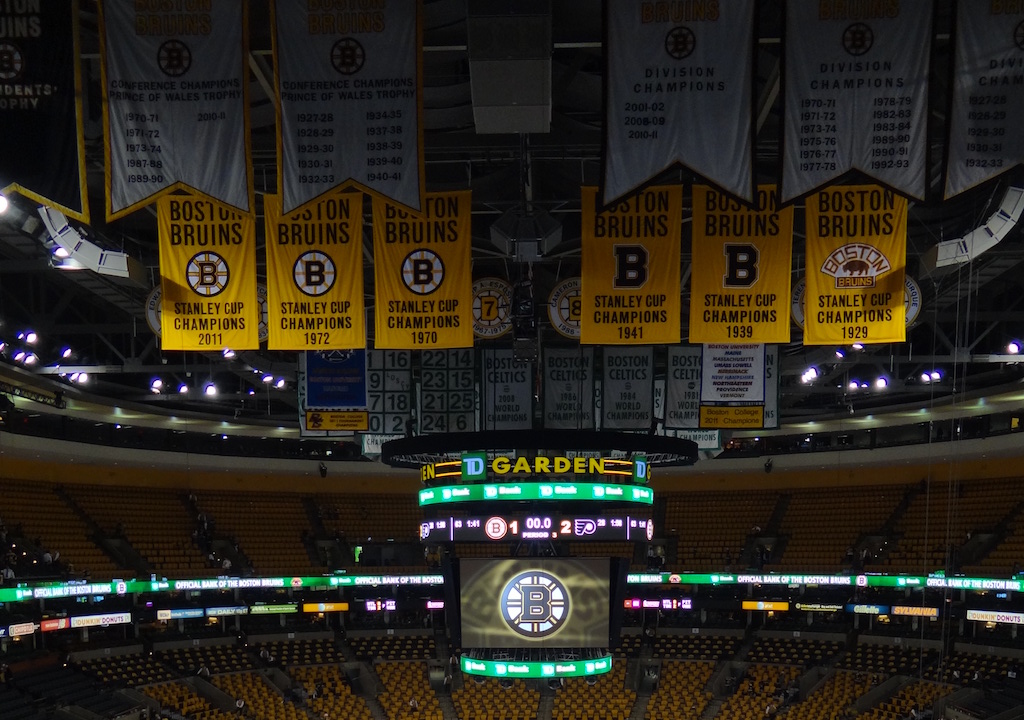
More in Boston Bruins games 1-18
Spotted an error? Know more?
This is a living reference — every entry is fact-audited, and reader corrections feed straight into our audit queue. Suggest an edit · See this site's audit record