
1970 Stanley Cup Final
Bruins sweep Blues; Orr's overtime goal becomes iconic.

Wikipedia / Wikimedia Commons
The 1970 Stanley Cup Final was the championship series of the National Hockey League's 1969–70 season, pitting the Boston Bruins against the St. Louis Blues. The Bruins swept the Blues in four games to win their first Stanley Cup since 1941, while the Blues appeared in their third consecutive finals series but lost each in a sweep. The series is most remembered for Bobby Orr's overtime goal in game four, which produced one of the most famous images in hockey history.
- Champion
- Boston Bruins
- Runner-up
- St. Louis Blues
- Series result
- Boston won 4–0
- Game 1 score
- Boston 6, St. Louis 1
- Game 2 score
- Boston 6, St. Louis 2
- Game 3 score
- Boston 4, St. Louis 1
- Game 4 score
- Boston 4, St. Louis 3 (OT)
- Conn Smythe Trophy winner
- Bobby Orr
Lore & Background
The Boston Bruins tied for first in the East Division with the Chicago Black Hawks with 99 points but lost the tiebreaker on wins. The St. Louis Blues finished first in the West Division with 86 points. This was the first playoff meeting between the two teams. In the regular-season series, Boston had three wins, St. Louis one, and two ties.
In game one, a shot from Boston's Fred Stanfield struck St. Louis goaltender Jacques Plante in the forehead, splitting his mask and knocking him unconscious. Plante later said the mask saved his life; doctors said he would have been killed without it. Ernie Wakely replaced him but allowed six goals, including a hat trick by Johnny Bucyk. Boston won 6–1. Game two saw Ed Westfall and Derek Sanderson each score twice in a 6–2 victory. In game three, Wayne Cashman scored twice and Phil Esposito had three assists in a 4–1 win.
Game four, played on Mother's Day, went to overtime. Bobby Orr scored the game-winning goal 40 seconds into overtime on an assist from Derek Sanderson. Orr was tripped by Blues defenseman Noel Picard immediately after scoring, and the image of Orr flying through the air with arms outstretched became the most famous hockey photograph. The Bruins completed the sweep and became the first American team to win the Stanley Cup since the Chicago Black Hawks in 1961.
Reader's Guide
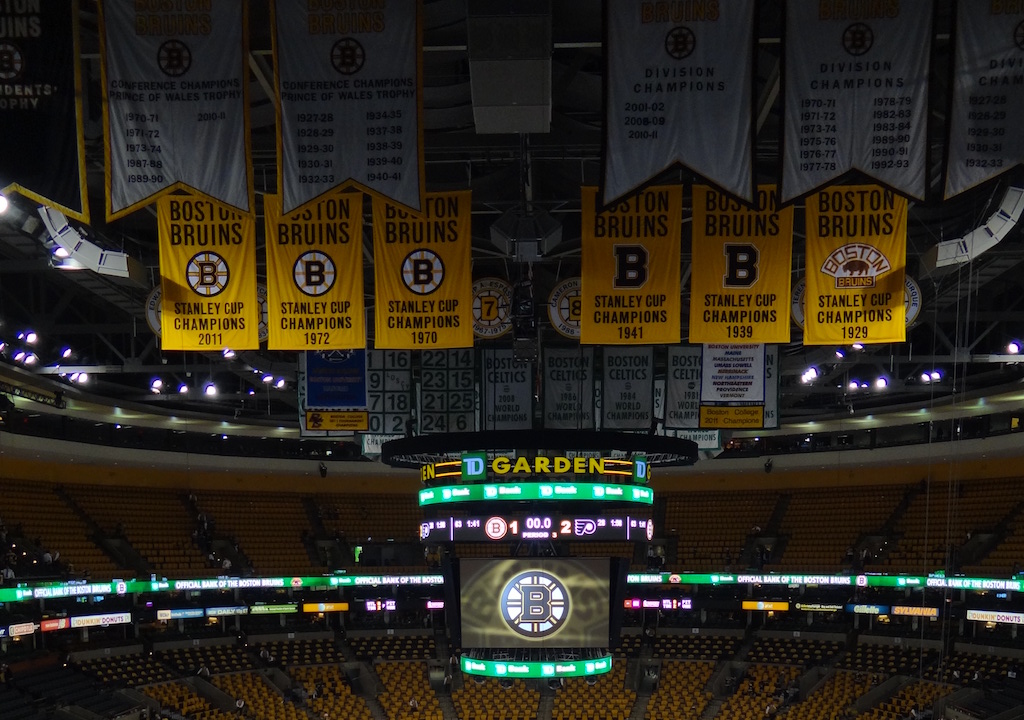
The 1970 Stanley Cup Final marked the end of a 29-year championship drought for the Boston Bruins and the beginning of a dynasty that would win two Cups in three years. The series is historically significant for Bobby Orr's overtime goal in game four, which produced an iconic image that transcends hockey. The goal and the photograph of Orr airborne are widely considered the most recognized symbols of the sport. The series also highlighted the protective value of goaltender masks after Jacques Plante's injury in game one. The St. Louis Blues, who had reached the Finals in each of their first three NHL seasons, were swept for the third consecutive year and would not return to the Final until 2019, when they defeated the Bruins in seven games. The broadcast legacy of the series is unusual: the most commonly replayed video of Orr's goal comes from the American CBS telecast, not the Canadian CBC feed, because the CBC's master tape was reportedly discarded to clear shelf space. The 1970 Final also saw the introduction of a new Presentation Stanley Cup, as the original bowl was retired to the Hockey Hall of Fame due to brittleness.
Did You Know?
- Jacques Plante's face mask split in half after being struck by a shot in game one; doctors said he would have been killed without it.
- Bobby Orr's overtime goal in game four produced the most famous and recognized hockey image of all time.
- The St. Louis Blues would not appear in another Stanley Cup Final until 2019, when they defeated the Bruins in seven games.
- The CBC's master tape of game four was reportedly thrown away to clear shelf space, so the CBS replay is most commonly used.
A Dynasty's Final Anthem Without Its Star
The 1990 Stanley Cup Final pitted the Edmonton Oilers against the Boston Bruins in a rematch of their 1988 championship meeting. However, the landscape had shifted dramatically: Wayne Gretzky, the franchise's iconic leader, had been dealt to the Los Angeles Kings during the 1988 off-season. Despite this seismic loss, Edmonton once again outlasted Boston, this time in five games. For the Oilers, this title represented their fifth Stanley Cup in just seven years, cementing their status as the dominant force of the era. Yet it also carried a bittersweet weight, as it would become the team's only championship after parting ways with Gretzky. The series also marked the end of a remarkable run: eight consecutive Stanley Cup Finals featuring a team from Alberta, and nine straight featuring a Western Canadian franchise, with the Oilers accounting for six of those appearances, the Calgary Flames for two, and the Vancouver Canucks for one.
The Longest Night in Final History
Game One of the 1990 Stanley Cup Final etched itself into hockey lore when Petr Klima buried the winning goal at 15:13 of the third overtime period, giving Edmonton a 3-2 victory over Boston. That single strike made the contest the longest game ever played in a Stanley Cup Final, edging out both Brett Hull's 1999 Cup-clinching goal and Igor Larionov's 2002 winner by fewer than 30 seconds. The marathon nature of the opener set an electric tone for the series, though the momentum would shift in subsequent games. In Game Two, the Bruins actually dominated much of the action, building a 15-4 shot advantage at one point before the Oilers rallied to take the game. Despite Boston's early-series offensive pressure and their greater number of scoring chances in the opener, Edmonton ultimately prevailed in five games to claim the championship.
Farewell to Boston Garden
On May 24, 1990, the Boston Garden hosted its final Stanley Cup Final game as the Oilers dispatched the Bruins 4-1 to clinch the series. Craig Simpson scored the decisive goal in what marked the first time Edmonton had ever won the Cup on the road. Notably, the Oilers had won all three Finals games played at Boston Garden across their previous championship runs, despite having won only one game away from their Northlands Coliseum home in those earlier series. Behind the net stood Bill Ranford, a backup who had assumed the starting role from Grant Fuhr for the remainder of the regular season and the entire postseason. His performance earned him the Conn Smythe Trophy as playoff MVP. The game also carried personal significance for Mark Messier, who captured his first Stanley Cup as team captain and his fifth overall. The venue itself would never again host a Final, and the Bruins would not return to the championship round until 2011.
Echoes Beyond the Trophy
The 1990 Final cast long shadows over the careers and franchises involved. For the Bruins, the loss began a 21-year absence from the Stanley Cup Final that would not end until their 2011 championship, breaking a 39-year drought. Defenseman Ray Bourque, a cornerstone of Boston's blue line, would not taste another Finals appearance until the Colorado Avalanche's 2001 title run. On the Oilers' side, the organization would not reach the championship round again until 2006, when they fell in seven games. Mark Messier's 1990 captaincy would prove a prelude to an even greater achievement: four years later, he won his sixth Stanley Cup as captain of the New York Rangers, scoring the Cup-winning goal and becoming the only player to captain two different Cup-winning teams. The series also marked the end of a nine-year streak of Western Canadian teams reaching the championship round, a run that included six Oilers appearances, two for Calgary, and one for Vancouver.
Gallery
More in Boston Bruins games 1-18
Spotted an error? Know more?
This is a living reference — every entry is fact-audited, and reader corrections feed straight into our audit queue. Suggest an edit · See this site's audit record