
1929 Stanley Cup Final
First all-American Stanley Cup Final; Bruins won undefeated.

Wikipedia / Wikimedia Commons
The 1929 Stanley Cup Final was the first championship series between two American teams, as the Boston Bruins faced the defending champion New York Rangers in a best-of-three format. Boston swept the series for its first Cup win.
Boston reached the final after a perfect playoff run, one of only a few in Cup history where a team lost no games. The Bruins eliminated the Montreal Canadiens, while the Rangers beat the New York Americans. Toronto defeated Detroit, then lost to New York. This was the third major pro sports title matchup between Boston and New York, following the 1912 and 1916 World Series.
In goal for Boston was rookie Cecil "Tiny" Thompson, who recorded a shutout in one of the two wins. He faced his brother Paul, a Rangers forward—the first time brothers played as goaltender and opponent in a Cup final. Tiny later said, "When I played goal for Boston against Paul (in) the final of 1929, he was just a rookie. It was really no contest."
After Boston’s 2–1 win in Game Two at Madison Square Garden, NHL President Frank Calder presented the Cup to Bruins captain Lionel Hitchman.
The Bruins’ engraving on the Cup was unusual. They used space left by the 1926–27 Ottawa Senators, but there was not enough room for all official members. Red Green, Eddie Rodden, and Lloyd Klein were omitted until the Cup was redone in 1957–58. Also added then were Hal Winkler (who spent the season in the minors), Eric Pettinger (traded to Toronto), and Frank Fredrickson (traded to Pittsburgh)—none of whom qualified under NHL rules. Owner Charles Adams and player George Owen were accidentally left off the second version, despite ample space. From 1958 to 1993, the 1928–29 Bruins appeared in two different spots on the Cup. Coach Cy Denneny’s name was engraved twice, once as coach and once as a player. A rumor holds that the original ring was melted down to make a trophy for Toe Blake upon his retirement.
- champion
- Boston Bruins
- runner_up
- New York Rangers
- series_format
- Best-of-three
- games_played
- 2
- first_all_american_final
- True
- bruins_playoff_record
- Undefeated (no losses)
- goalie_shutout
- Cecil 'Tiny' Thompson posted the third Stanley Cup shutout for a rookie
Lore & Background
The 1929 Stanley Cup Final marked the first meeting of two U.S.-based teams in the championship. The Boston Bruins, having knocked off the Montreal Canadiens in the playoffs, faced the New York Rangers, who had defeated the New York Americans and then the Toronto Maple Leafs. Boston won the series in two straight games, becoming one of the few Cup winners to not lose a single playoff game, and the last team until 1952 to win every playoff game they played.
Goalie Cecil 'Tiny' Thompson backstopped the Bruins to consecutive wins, posting the third Stanley Cup shutout for a rookie. Game two was played at Madison Square Garden. Thompson faced his brother Paul Thompson, a forward with the Rangers, marking the first time a set of brothers faced each other in a goaltender-forward combination in Stanley Cup Final history. Tiny said of the matchup: 'When I played goal for Boston against Paul (in) the final of 1929, he was just a rookie. It was really no contest.'
The Stanley Cup was presented to Bruins captain Lionel Hitchman by NHL President Frank Calder following Boston's 2–1 win in game two. The engraving of the 1929 Bruins on the Cup has a complex history: the team used the rest of the ring from the 1926–27 Ottawa Senators, leaving off Red Green, Eddie Rodden, and Lloyd Klein. These names were added when the Cup was redone in 1957–58. Additionally, players Hal Winkler, Eric Pettinger, and Frank Fredrickson were included in 1957–58 even though they were part of another team when the Cup was won. By mistake, Charles Adams (President/Owner) and George Owen (player) were left off the second version. Cy Denneny's name was engraved twice on the larger ring, once as coach and once as a player. A rumor holds that the original ring of the 1928–29 Bruins was melted down to make a trophy for Hector 'Toe' Blake.
Reader's Guide
The 1929 Stanley Cup Final is historically significant as the first championship series between two American teams, reflecting the NHL's expansion beyond Canada. The Boston Bruins' undefeated playoff run—the last such feat until 1952—underscores their dominance. The series also featured the first brotherly goaltender-forward matchup in Final history, with Tiny Thompson facing his brother Paul. The engraving controversies, including omitted players and duplicate engravings, highlight the evolving standards for Cup recognition. The Bruins' victory established Boston as a hockey power and set a precedent for future all-American Finals.
Did You Know?
- The 1929 Final was the first Stanley Cup Final between two American-based teams.
- Boston won the series without losing a single playoff game, a feat not repeated until 1952.
- Goalie Cecil 'Tiny' Thompson faced his brother Paul Thompson, a Rangers forward, in the Final.
- Three Bruins players—Red Green, Eddie Rodden, and Lloyd Klein—were initially left off the Cup due to space constraints and were added in 1957–58.
A Dynasty's Final Chapter Without Its Star
The 1990 Stanley Cup Final served as a poignant rematch of the 1988 championship series, yet it carried a defining absence. Wayne Gretzky, the franchise's iconic leader, had been dealt to the Los Angeles Kings during the 1988 off-season, and Edmonton entered this contest without the player who had anchored their previous titles. Despite that loss, the Oilers overcame the Boston Bruins in five games to claim the trophy. For the franchise, this was their fifth Cup in seven years and, critically, the only championship they would ever win after parting with Gretzky. The broader narrative was equally striking: this marked the final appearance in the Finals by an Alberta team in a streak of eight consecutive years, and the last of nine straight Finals featuring a Western Canadian club. The Oilers had reached six of those nine, the Calgary Flames two, and the Vancouver Canucks one. In many ways, this series closed a remarkable chapter of Western Canadian hockey supremacy.
Overtime Drama and Early Bruins Dominance
Though the Oilers ultimately prevailed in five games, the series opened with the Bruins firmly in control. Boston generated more scoring chances in the opener and, in Game 2, held a 15-4 shot advantage at one point before Edmonton mounted a comeback. The most memorable moment of the series, however, came in Game 1, which stretched into three overtime periods. At 15:13 of the third extra period, Petr Klima scored the decisive goal to give Edmonton a 3-2 victory. That game stands as the longest in Stanley Cup Final history, narrowly edging out both Brett Hull's Cup-winning goal in 1999 and Igor Larionov's game-winner in 2002 by less than thirty seconds. The extraordinary length of that contest set the tone for a series in which the Bruins clearly possessed the momentum early on, yet the Oilers' resilience in the clutch ultimately carried them to the title.
A Road Clinch and a Farewell to Boston Garden
On May 24, 1990, the Oilers completed their title run with a 4-1 victory at Boston Garden, securing the Cup in five games. This marked the first time in franchise history that Edmonton had clinched a Stanley Cup on the road. In their previous Finals appearances, the Oilers had won only one game away from their home arena, the Northlands Coliseum. Craig Simpson scored the game-winning goal in the clincher. Behind the net, Bill Ranford, who had stepped in as starter after Grant Fuhr's injury-plagued season, was named the Conn Smythe Trophy winner as playoff MVP. The night carried additional historical weight: it was the final Stanley Cup Final game ever played at the Boston Garden. For Mark Messier, the victory represented his first Cup as team captain, though he would go on to win a sixth as captain of the New York Rangers four years later, scoring the Cup-winning goal and becoming the only player to lead two different franchises to the championship.
Echoes of a Lost Era
The 1990 Final left deep scars on Boston. The Bruins would not return to the Stanley Cup Final until 2011, when they finally broke a 39-year championship drought. For defenseman Ray Bourque, the wait was even longer; he did not reach another Final until the Colorado Avalanche captured the Cup in 2001. Edmonton, meanwhile, did not make another Finals appearance until 2006, when they fell in seven games. The legacy of the 1990 roster endures in the Cup's engravings: seven players and seven non-players were part of all five Oilers championships, while nine additional non-players appeared across those titles. Among the players, Glenn Anderson, Kevin Lowe, and Mark Messier uniquely shared the distinction of being on all five Oilers Cups and also the 1994 New York Rangers championship. The series thus stands as a bridge between eras, a final flourish of one dynasty's dominance and the beginning of long dry spells for both franchises.
Gallery
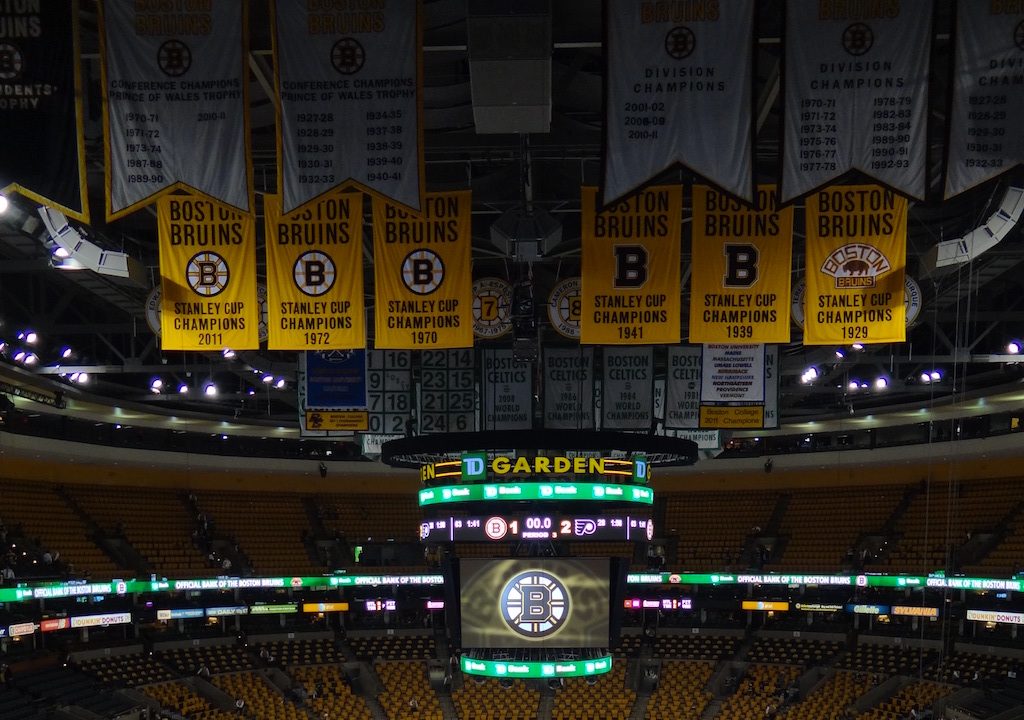
More in Boston Bruins games 1-18
Spotted an error? Know more?
This is a living reference — every entry is fact-audited, and reader corrections feed straight into our audit queue. Suggest an edit · See this site's audit record